HackFirstAid

One stack. Twelve audiences.

Different people, same incident.

A ransomware actor doesn't care whether you're a parent, a clinic manager, a mayor, a school superintendent, or a board director. The pattern is the same. The stakes are different.

HackFirstAid treats cyber-readiness as one operational stack — triage, playbooks, recovery, training, vCISO advisory — adapted to the realities of each audience that has to use it. Personal lives, the businesses people work at, the medical practices they visit, the towns they live in, the schools their kids attend, the boards governing all of them, the executive leadership signing for the decisions those boards advise on, the IT teams and MSPs who run the systems all of that depends on, the law firms that hold their clients' secrets — and their clients' money, the pension administrators that hold a member's lifelong identity record and the next benefit payment, the family offices where the operational and the personal are the same attack surface — and the Household portal that protects everyone under the same roof.

Twelve sites. Same backbone. Each one tuned to the language, regulations, and decision rights of the people opening it.

The twelve sibling sites

Pick the one that fits.

Each site is built for its own audience, but they all share the same triage engine, playbook library, and recovery framework. Visit the one that matches your situation — or all of them, if your situation crosses lines (most do).

Coverage crosses lines. A board director is also an individual. A clinic owner is also a small business. A municipality serves residents who are also parents. An executive officer is often also a board director on someone else's board. An IT lead is the security team at a clinic, a district, and an SMB at once. A law firm is a small business, a regulated professional practice, a workplace of high-value individuals — and a HIPAA Business Associate the moment it represents a healthcare client. A pension administrator answers to a board of trustees, pays retirees who are individuals at home, and may hold health data on disability pensions. And a family office is a workplace, an investment operation, and a household all at once — the office is breached through the family, and the family is robbed through the office. The sites cross-link to each other for exactly this reason.

How we work

Triage, playbook, recovery — repeated across every audience.

  1. 01

    Triage in minutes, not hours

    Every sibling site opens with a triage flow tuned to that audience — what's happening, what to do in the next sixty minutes, when to call who. No signup gate, no email capture, no consultant in between you and the answer.

  2. 02

    Playbooks the people actually doing the work can run

    A small medical office manager, a town clerk, a parent at the kitchen table, a board chair on a Sunday call. The playbooks are written for the person whose hands are on the problem — not the consultant who'll show up Tuesday.

  3. 03

    Recovery plus the layer above

    Once the bleeding stops, the work shifts to insurance, regulator notification, vendor coordination, and board-level reporting. HackFirstAid follows the incident all the way through to “closed” — and feeds the lessons back into the playbooks the next person will run.

Same backbone on every site. The audience-specific work is the wording, the regulations cited, and the people you call.

Who built this

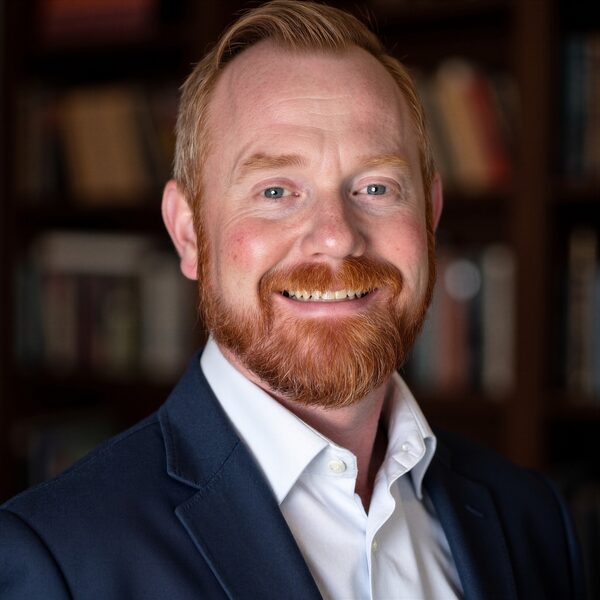
Travis Barlow, founder of HackFirstAid

Built by Travis Barlow.

25+ years of incident response across the public sector. 580+ engagements. Founder of the Atlantic Security Conference (AtlSecCon) — one of the longest-running independent cyber conferences in Canada.

HackFirstAid started because the gap between "enterprise security firms" and "the people who actually have to deal with an incident" kept getting wider. Small medical practices, K-12 districts, municipalities, and boards aren't underserved because they don't matter. They're underserved because nobody built for them.

Twelve sibling sites is what built-for-them looks like.

Partner with us

Brokers, MSPs, associations, and resellers.

HackFirstAid runs a structured partner program for cyber-insurance brokers, MSPs, industry associations, and security resellers who serve any of the twelve audiences. Co-branded deployments, white-label triage flows, revenue share on managed-security and vCISO engagements, and a code of conduct that keeps the program honest.

  • Co-branded triage and playbooks.

    Your logo, our backbone.

  • Revenue share on managed services.

    vCISO, IR retainers, training subscriptions.

  • No exclusivity.

    Partner with anyone you like. We don't lock anyone in.

Interested? Email partners@hackfirstaid.com — or use the contact form below.

Press & media

For journalists and analysts.

HackFirstAid is happy to provide expert commentary on cyber incidents affecting individuals, small businesses, medical practices, municipalities, K-12 districts, and boards — especially incidents involving ransomware, identity theft, public-sector breaches, and HIPAA / FERPA / municipal-data exposure.

Founder Travis Barlow is available for interview, background, and on-record technical analysis. Same-day turnaround when possible.

For active incident commentary, email is fastest. Travis monitors the press inbox personally.

Newsletter

The HackFirstAid Brief.

One email a month. One item from each of the twelve siblings — plus a short founder column. No tracking pixels, no marketing sequences, one-click unsubscribe.

Contact

General inquiries.

For audience-specific questions (you're a parent, a clinic, a town, a district, a clinician, a board), the sibling sites have triage flows that will get you a better answer faster. For everything else — partner inquiries, press, investor questions, speaking requests, or general "how do I find the right starting point" — use the form below or email hello@hackfirstaid.com.